ServicesReverse Osmosis
Reverse Osmosis Systems in Elm Grove
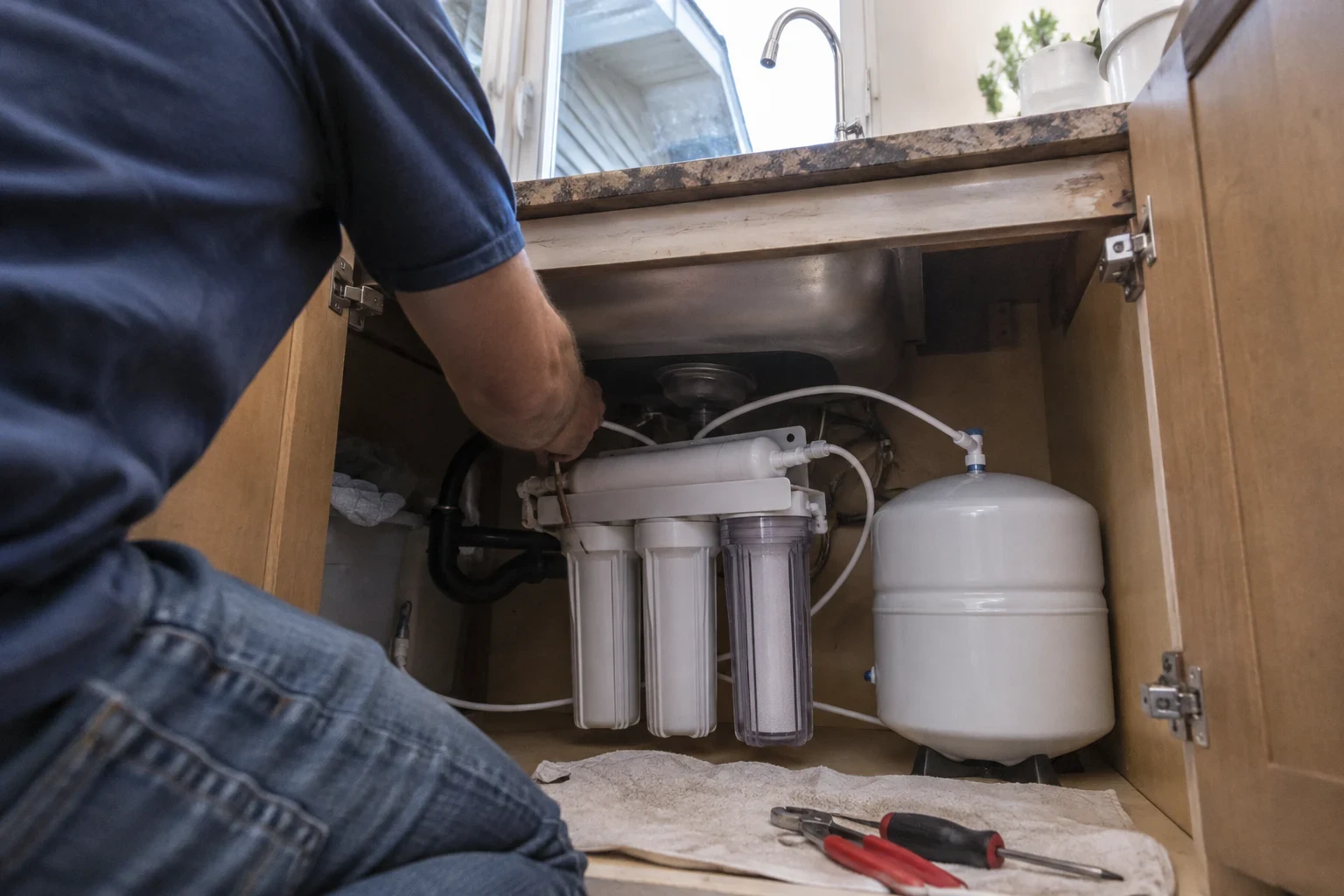
A reverse osmosis system under your kitchen sink delivers filtered water for drinking, coffee and cooking through its own faucet next to the main tap. Before we recommend anything, we check your cabinet and plumbing, walk you through the choices in plain terms and hand you a filter schedule that is easy to keep.
How reverse osmosis helps at your tap
Inside an RO system, water is pressed through a membrane fine enough to stop dissolved minerals, nitrates and metals such as lead that older pipes can shed. Carbon stages ahead of it strip out the chlorine taste. The finished water fills a compact tank under the sink, so a glass or a pasta pot is ready whenever you need it.
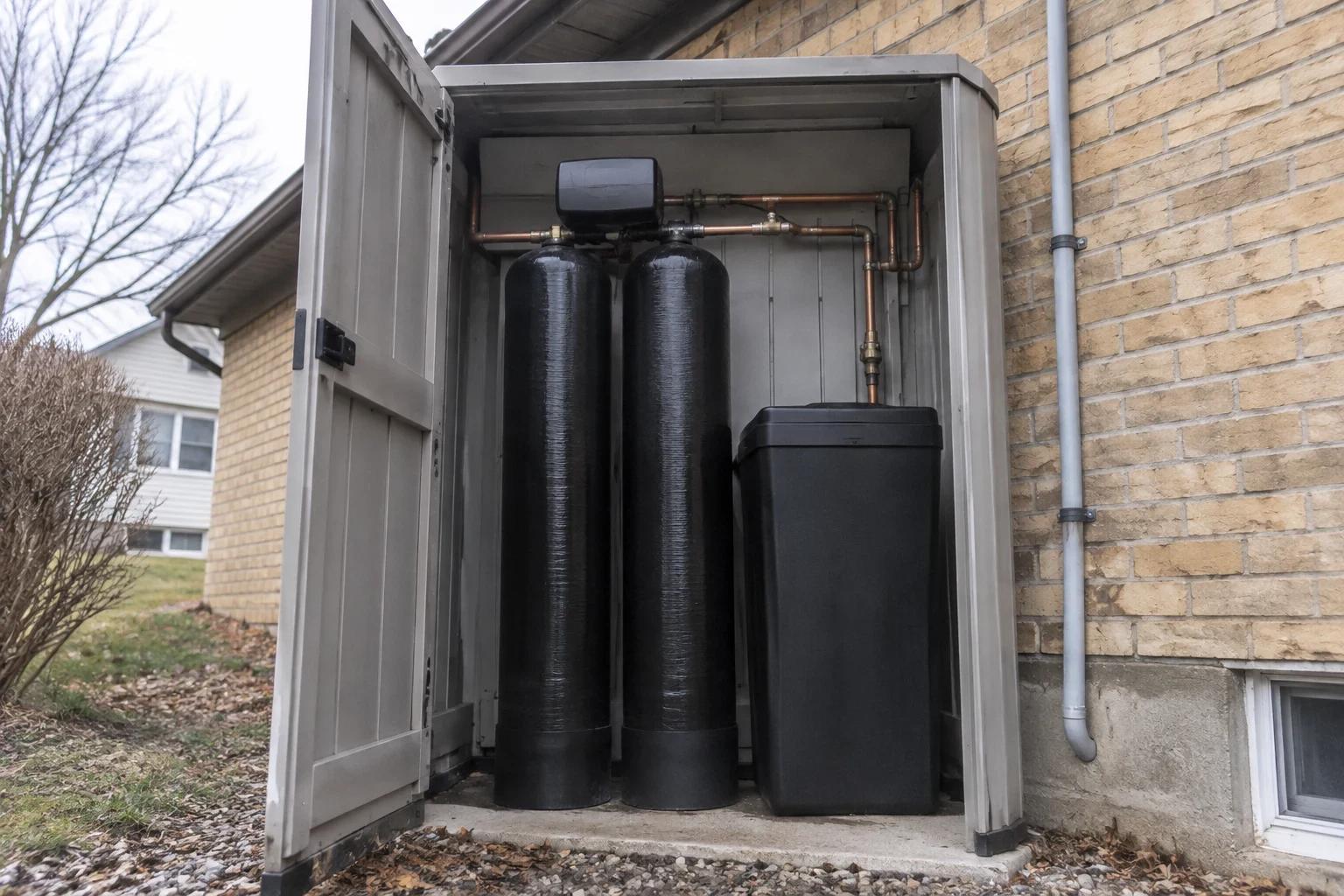
RO works at a single tap. Showers, the washer and the dishwasher keep getting the same water as before. For treatment throughout the house, look at Whole-Home Filtration or Water Softeners, and plenty of households run one of those with RO added at the kitchen sink.
Some calls start after a change you can taste, like an odd flavor following a heavy spring storm or a well that took in surface water. We will explain honestly what RO can fix and what needs attention first.
What comes with your RO install
The right unit for your household
Standard, remineralizing or tankless: we help you pick based on how much your family drinks each day and how much room your cabinet has.
Membrane-saving prefilters
Water passes a sediment stage to trap grit, then a carbon stage to pull out chlorine. The membrane downstream lasts longer because of it.
Its own faucet
The drinking faucet goes in a spare sink opening, or we cut a neat hole in the countertop when none is free.
A drain hookup done right
Rinse water runs to your drain through a saddle we position so it stays quiet and does not back up.
Refrigerator line if you want it
We can extend filtered water to your fridge or ice maker, which gives you clearer cubes with no off taste.
Startup and a quick lesson
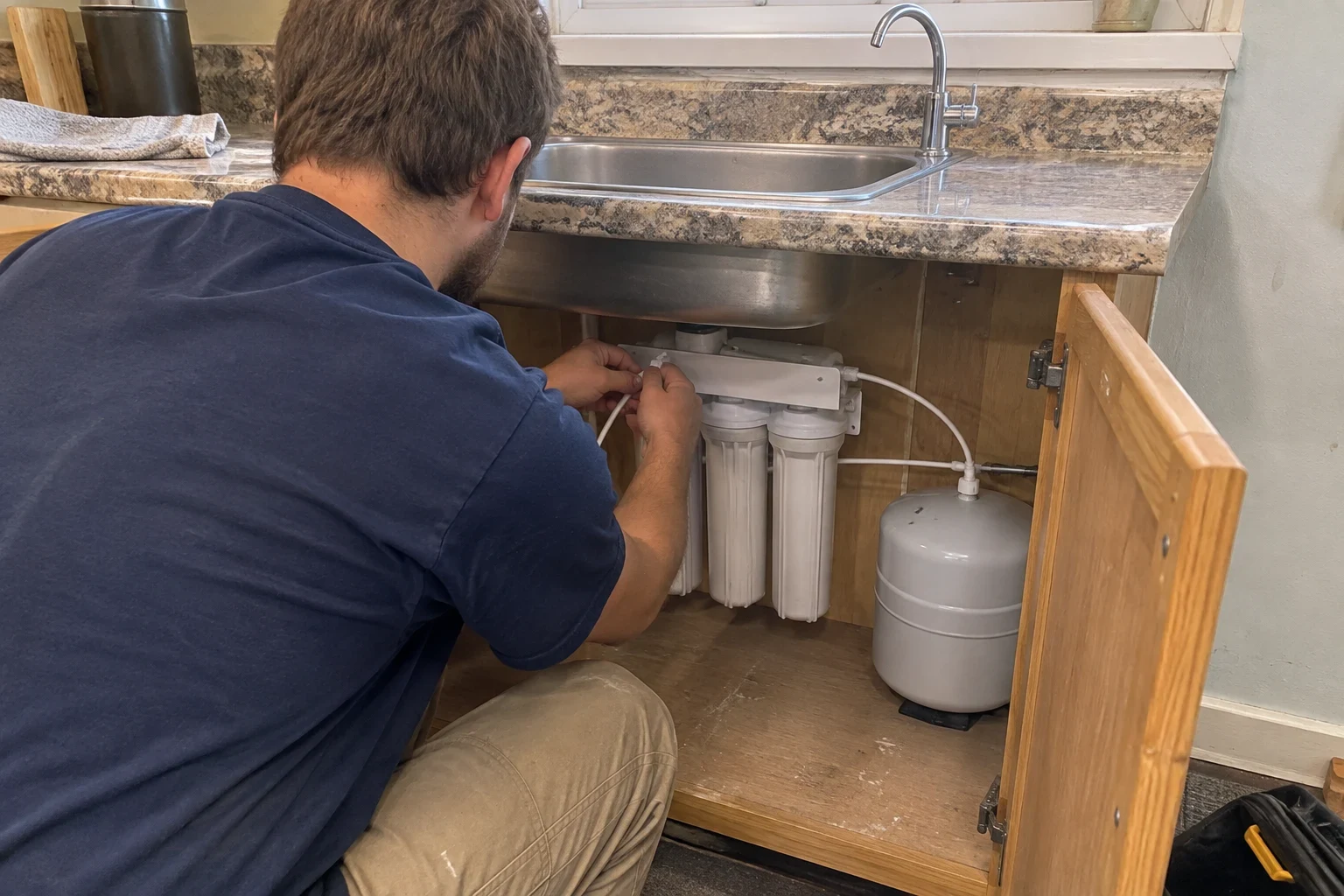
We flush the new system, look over each fitting for leaks and show you how filter changes work.
When an RO system is worth it
- Bottled water is on every shopping list
- If you carry cases of water home each week, an RO faucet can take over that job and clear out pantry space.
- Coffee or tea tastes like a pool
- That faint chlorine note usually comes from disinfectant in the supply. The carbon stage removes it.
- Your pipes have some age on them
- Original plumbing and old solder can release lead at the faucet. RO ranks among the most effective ways to cut it from your drinking water.
- Scaly kettles and cloudy cubes
- A white film inside the kettle and murky ice usually mean dissolved minerals. RO takes those out of the water you drink.
- Well water tastes different after heavy rain
- Flooding can force surface water into a well. The well needs disinfecting and checking first, and our Well Water Treatment page covers that. After that, RO gives you a dependable extra layer for drinking water.
What to expect from start to finish
- 1
Start with a phone call
Tell us what you dislike about your water and if it comes from a private well or the city. We give you a free quote and can go over financing information if that is useful.
- 2
We check the cabinet
We look at the space under your sink, the cold water shutoff, the drain and your incoming pressure. If pressure runs low, we let you know if a booster pump would help.
- 3
The install itself
Expect a few hours of work. We protect the cabinet floor, shut the cold supply, tie in the feed and drain, set the faucet and tank, and leave the kitchen tidy.
- 4
Flushing and the first fill
The first tanks go to the drain to rinse the new filters. After that the tank fills over a few hours, and you keep a written filter schedule.
What moves the price of an RO system
We put your quote in writing, with the system, parts and labor on separate lines so you can see where every dollar goes. Your quote holds for 30 days, and you pay in full only once the install is finished. If spreading the cost out would help, ask us about financing through U.S. Bank Avvance, on approved credit. After you sign, you have three business days to cancel if you change your mind.
- The unit you choose
- A standard tank model is the least expensive option. Remineralizing and tankless units cost more, and we will tell you honestly whether your family would notice the difference.
- Countertop material
- Using a spare sink hole is quick. Drilling through granite or quartz for a new faucet takes extra time and diamond bits.
- Additional water lines
- Running filtered water to a refrigerator, ice maker or wet bar means more tubing and more labor. A line that has to drop into the basement and come back up adds to that.
- Pressure and what comes before the RO
- Weak incoming pressure can mean adding a booster pump. Hard water wears out a membrane faster, so in some homes we suggest a softener upstream.
Common questions about reverse osmosis
- How much water goes down the drain?
- An RO membrane needs a steady rinse to stay clear, so some water always goes to the drain. Current designs, especially those with a permeate pump, waste far less than units from years ago. Because only your drinking and cooking water runs through it, most households barely notice a change on the bill.
- When do the filters get replaced?
- The prefilters usually need swapping every six to twelve months. The membrane tends to last a few years, depending on what is in your water. We show you how to do the change yourself, and it takes about ten minutes.
- Does RO water taste flat?
- With the minerals removed, some people find the water tastes very clean, and a few call it flat. If that bugs you, we can add a remineralizing cartridge after the membrane. It returns a trace of calcium and magnesium so the water has a little more body.
- Should I add a water softener as well?
- Not in every home. When your water leaves scale on faucets and fixtures, a softener protects the RO membrane along with the rest of your plumbing. We will give you a straight answer on whether it is worth the cost for your home.
- Can an RO system stand in for a boil notice or well disinfection?
- No. A boil notice or a flooded well has to be handled properly first, following the guidance you receive. Once the source is back in good condition, RO makes a solid everyday layer for the water you drink.
Clean drinking water, one faucet away
Tell us a little about the cabinet under your kitchen sink and anything you have noticed in your glass. We will lay out the options and the full price before anything goes on the calendar.