ServicesWell Water Treatment
Well Water Treatment in Elm Grove
Rusty rings in the tub, a sulfur smell from the hot tap or water that turns murky after heavy rain usually trace back to something specific in your well. We pick equipment for what your water carries, install it within a day and show you how each stage works.
Treatment built around your well
Water from a private well reaches your faucets exactly as the ground delivers it, with no city plant cleaning it up along the way. Dissolved iron, hardness minerals and fine sediment all travel into your home together, which is why one store-bought cartridge seldom keeps up for long.
Our first step is listening to what you already know: any recent lab results from your well, the colors showing up in sinks and laundry, and any odor at the faucets. Then we suggest only the stages your water calls for, set in an order where each one shields the next.
Spring rain and snowmelt can shift a well's water within days. If that happens, we help you decide what needs attention now and what can safely wait.
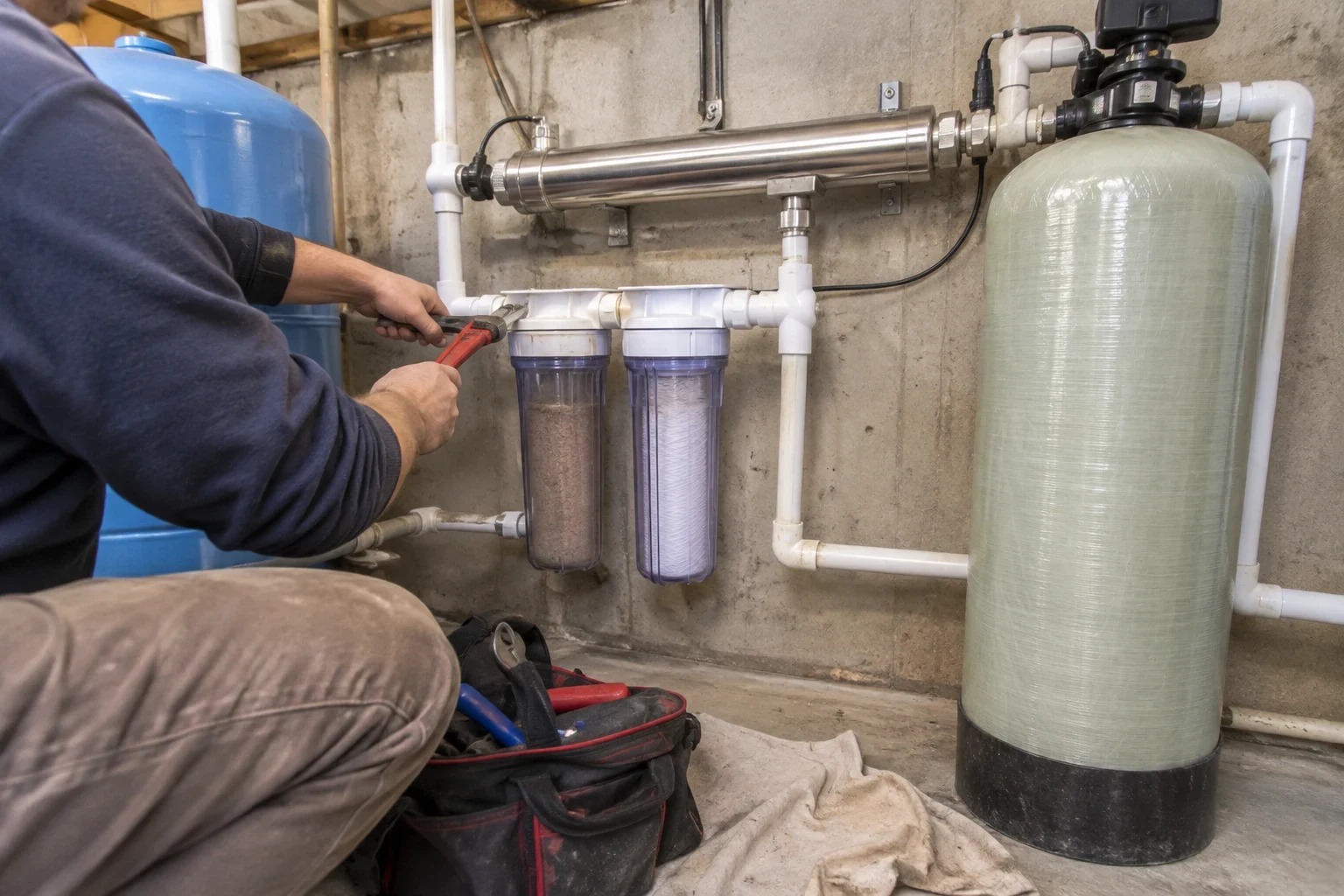
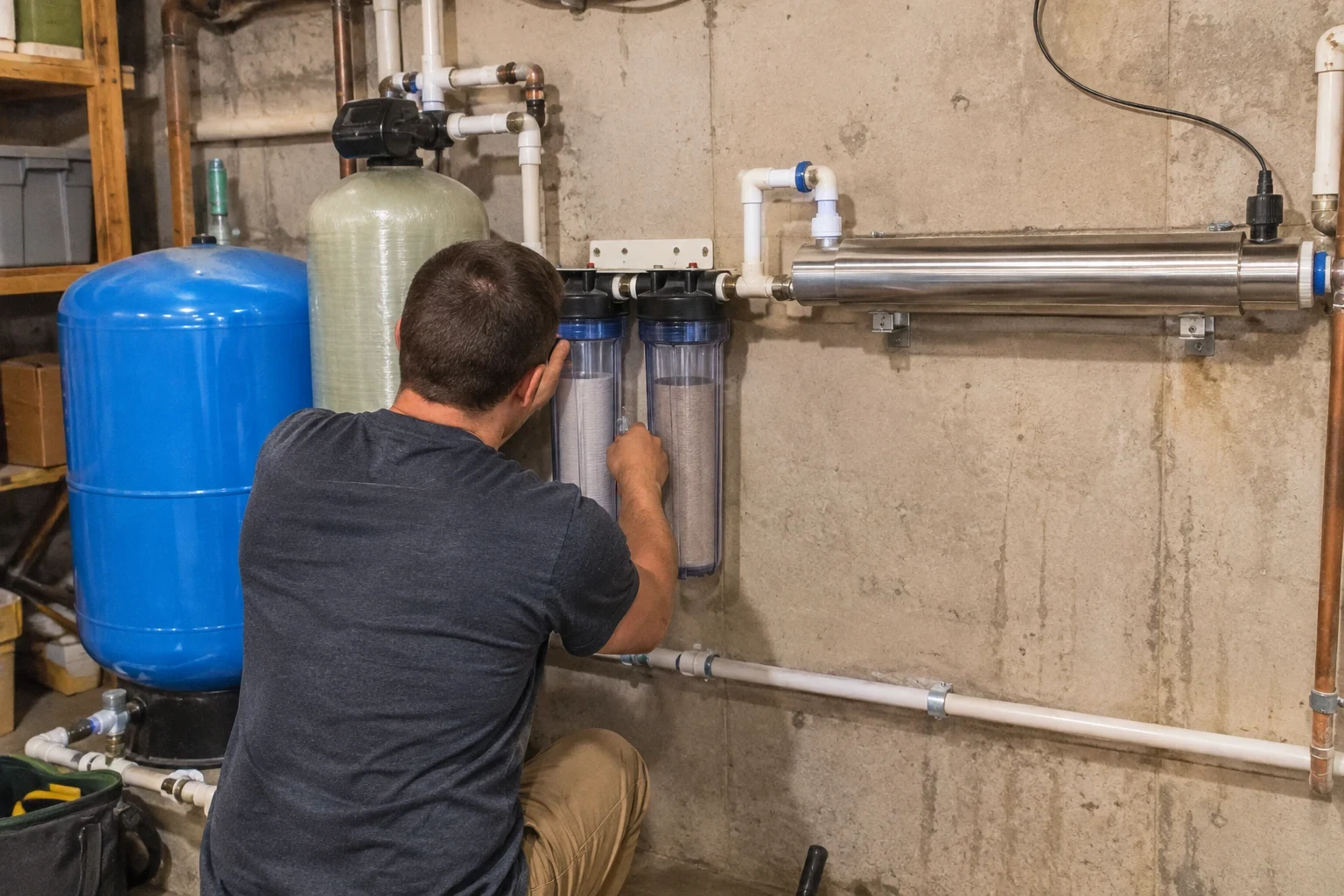
What a well water system can include
- Sediment filtration
- A first stage that catches sand, grit and rust flakes before they reach the rest of the equipment. It keeps valves and media from clogging early.
- Iron and manganese removal
- An oxidizing filter turns dissolved iron and manganese into particles it can trap, then backwashes them to the drain on a schedule. This is what ends the orange and black staining.
- Sulfur odor control
- That rotten-egg smell comes from hydrogen sulfide. The same oxidizing approach used for iron often handles it, and we confirm which setup suits the strength of the odor.
- Softening for hard well water
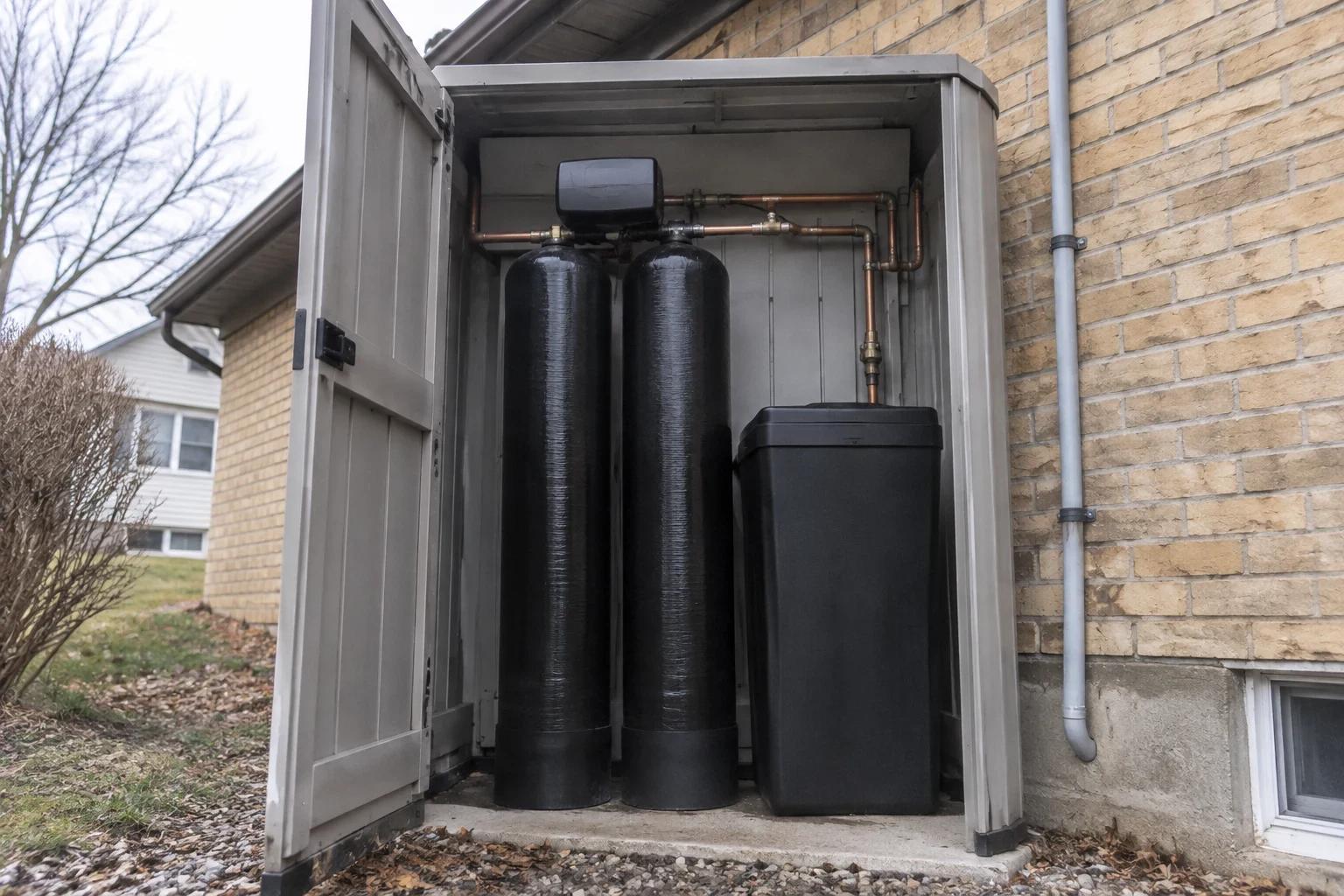
- Many wells in the area run hard. A water softener placed after the iron stage cuts scale on fixtures and in your water heater without being overloaded by iron.
- UV disinfection
- An ultraviolet chamber treats water as it flows, without adding chemicals. It is a good last stage for homes concerned about bacteria in the well.
- Drinking water stage
- For cleaner water at the kitchen tap, a reverse osmosis unit under the sink can finish the job after the whole-house stages.
Signs it's time to treat your well water
Rust rings and dark streaks
Reddish-brown marks in the toilet bowl, the tub or on white laundry come from iron. Streaks that look black or gray usually point to manganese.
Sulfur smell from the taps
A rotten-egg odor that gets worse with hot water can mean your water heater is reacting with sulfur from the well.
Grit or haze in a glass
Fine particles settling at the bottom of a glass, or faucet aerators that clog every few weeks, mean sediment is wearing on your fixtures and appliances.
A change after a storm
If your water looks, tastes or smells different after heavy rain, or floodwater reached the wellhead, switch to bottled water until the well has been checked and disinfected under county health guidance. After that, we can inspect your treatment equipment and swap out anything that took in dirty water.
Crusty fixtures and spotted glasses
White buildup on showerheads, spots on dishes and a water heater that pops or rumbles are typical of hard water.
What to expect from start to finish
- 1
Start with a phone call
Describe what's going on with your water and pass along any well results you have on hand. We'll ask about your pump, your pressure tank and where the water line enters your home.
- 2
An in-person look
We measure flow and pressure, check the available space and find a drain near the pressure tank. You then receive a written quote listing every stage and the reason it's included.
- 3
Install day
Most systems are finished in one day. Your water is off only while we connect to the line, and we lay down floor protection wherever we're working.
- 4
Start-up and handoff
We flush everything, program the backwash and regeneration timing, and show you the bypass valve and any filter changes. The work area is left clean when we go.
What moves the cost of well water treatment
No two wells are the same, so price follows what your water needs. A home with only sediment needs far less than one dealing with iron, sulfur and hardness together. Your quote spells out each stage so you can see where the money goes.
- What is in your water
- Iron level, sulfur strength and hardness decide which stages you need and how large they must be.
- Your well's flow rate
- Equipment has to keep up with your pump. Higher flow calls for larger tanks and valves.
- Space and plumbing
- Tight basements, a distant drain or older piping near the pressure tank can add parts and time.
- Number of stages
- Adding UV or a reverse osmosis unit for drinking water adds to the total but can be phased in later.
Well water treatment questions
Something not covered here? (262) 287-0725
Floodwater reached my well during a storm. What comes first?
Use bottled water for drinking and cooking until the well has been disinfected and confirmed safe under your county health department's guidance. Filters are not a fix for a flooded well. Once the well itself is cleared, give us a call and we'll inspect your treatment equipment and replace any cartridges or media that were exposed to floodwater.
Can a water softener handle iron by itself?
A softener can manage a small amount of dissolved iron. Heavier iron coats the resin, and the stains come back. For those wells, a dedicated iron filter installed ahead of the softener does the job better and helps the softener last longer.
What upkeep does a well system need?
Expect to change sediment cartridges a few times a year, depending on your water. UV lamps are usually replaced about once a year. Iron filters and softeners backwash on their own, so your main task is keeping salt in the softener.
Will treatment lower my water pressure?
Not when the equipment is sized to your well's flow. We check your pump and pressure before we quote so the system can keep up with everyone in your home.
How does payment work?
There is no deposit to get started. The full balance is due once your install is finished. If spreading out the cost would help, financing through U.S. Bank Avvance is an option, on approved credit. The price we give you stays good for 30 days, and after you sign you still have three business days to change your mind and cancel.
Let's get your well water back on track
Describe the stains, smells or grit you're dealing with, and we'll lay out your options in plain terms. If spreading out the cost would help, ask about financing during the same conversation.