ServicesWhole-Home Filtration
Whole-Home Filtration in Elm Grove
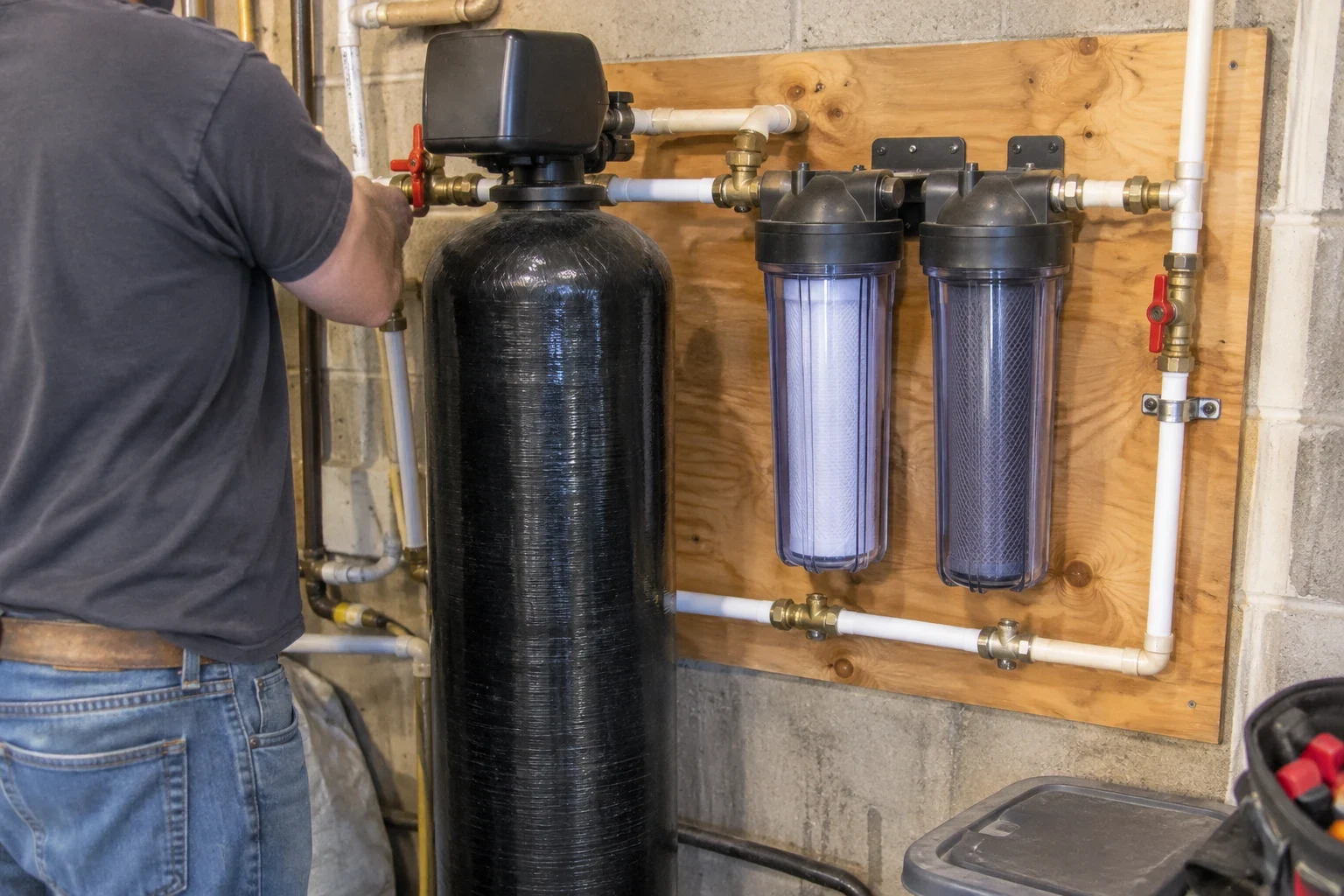
Our whole-home filters go on the main line, right where water comes into your home. That way the shower, the kitchen tap and the washer all draw water with the chlorine smell, grit and odd taste already taken out. We size the system to your plumbing and clean up before we leave.
What a whole-home filter does for you
A whole-home system, sometimes called a point-of-entry filter, sits on the main line right after your water meter or pressure tank. Most of the systems we put in pair a sediment prefilter with a large bed of activated carbon. The sediment stage catches sand, rust flakes and grit. The carbon grabs chlorine and the compounds behind musty or chemical tastes and smells.
It is the right call when the problem shows up everywhere: the shower smells like a pool, the coffee tastes flat, or aerators keep clogging. If your main concern is drinking water only, a reverse osmosis system under the kitchen sink may fit better, and we will tell you that. If spots and scale are the issue, that points toward a water softener instead, and many homes end up with a filter and a softener working side by side.
What comes with the install
A system sized to your flow
We count bathrooms and fixtures and look at your pipe size so the filter keeps up when the shower and dishwasher run together. An undersized tank is the most common reason people feel a pressure drop.
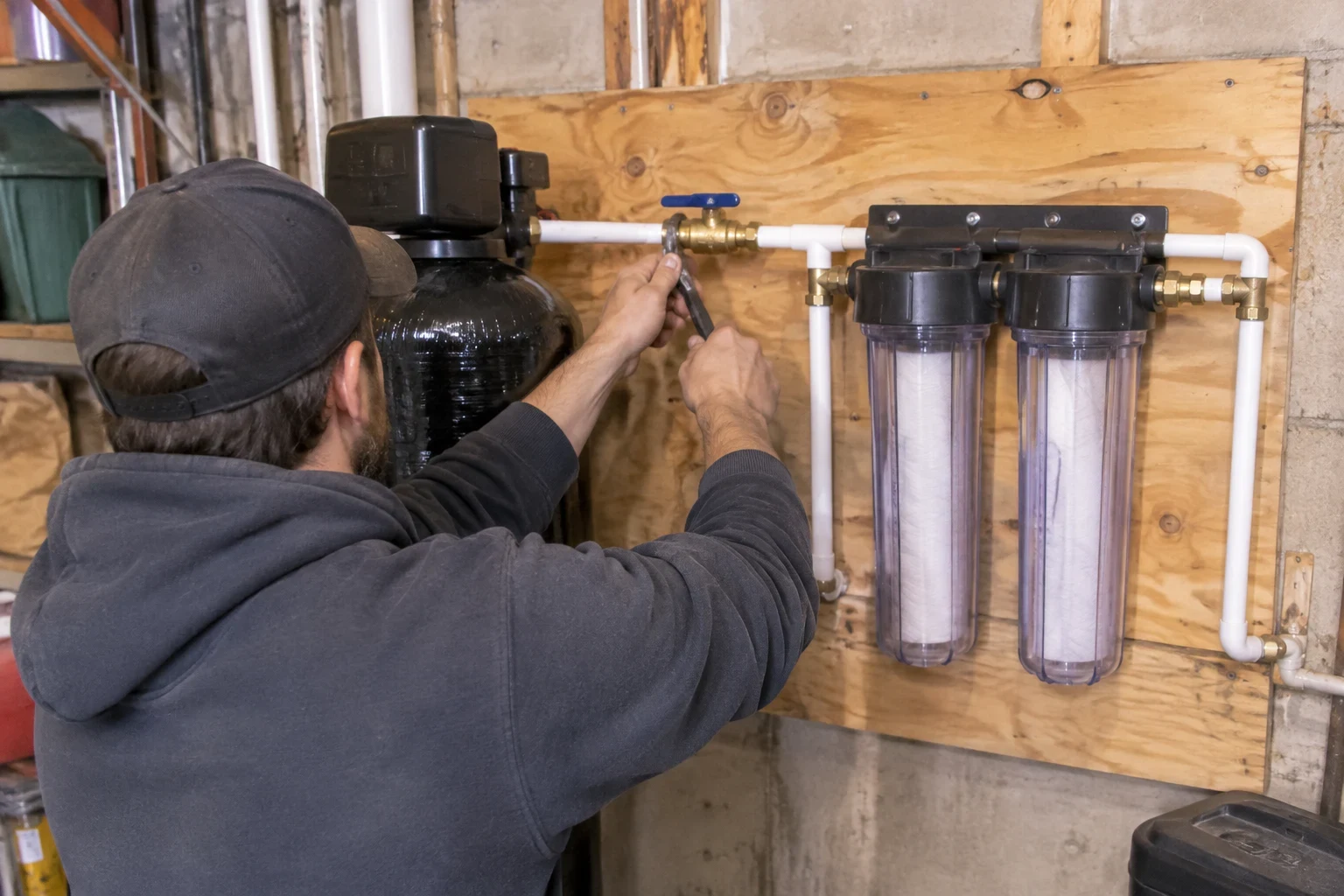
Sediment prefilter
A first stage that traps grit and rust before it reaches the carbon. It protects the main media and is the part you replace most often.
Carbon filtration tank or housing
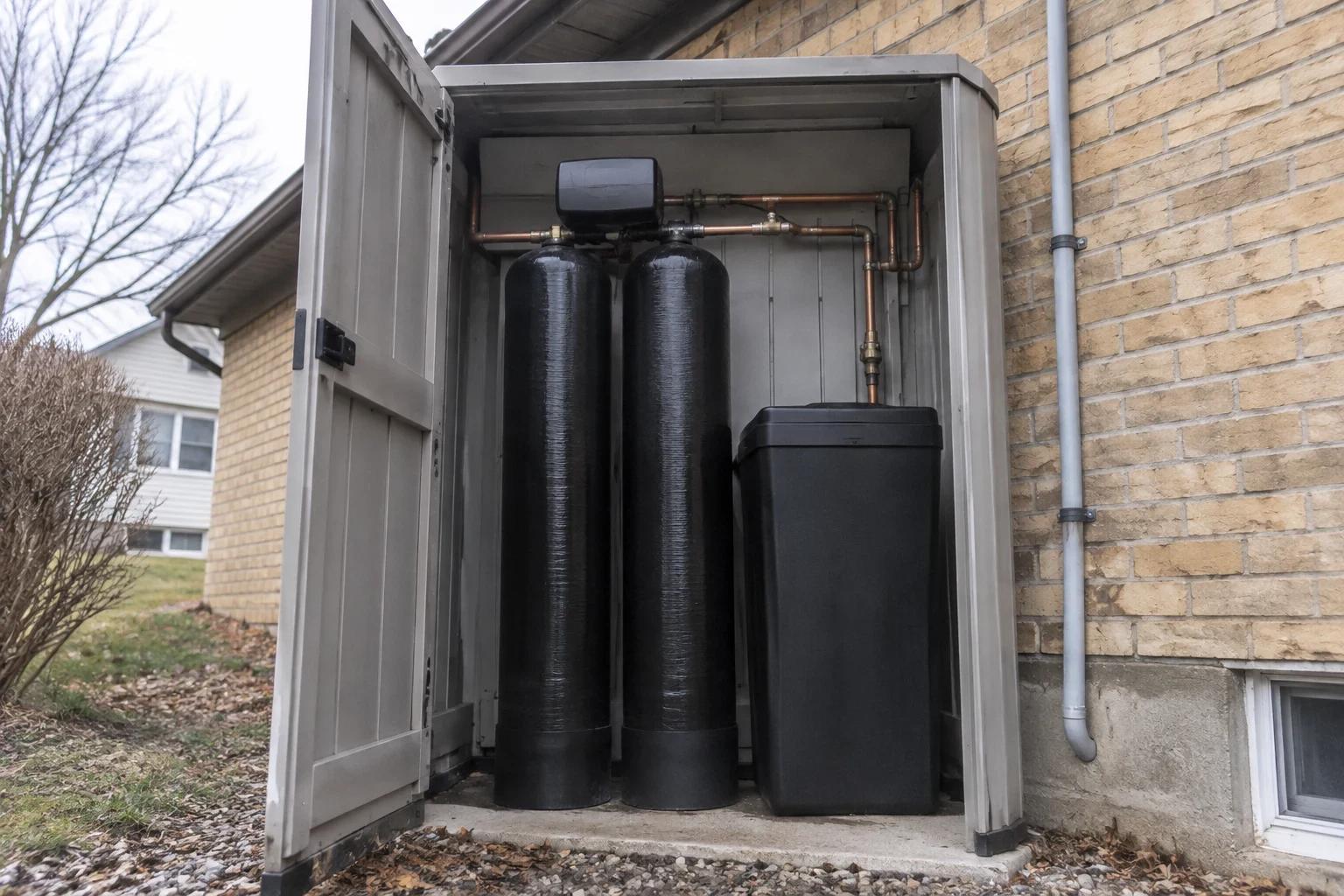
Activated carbon for chlorine taste and odor. Depending on your needs, this is either a cartridge housing or a larger tank that backwashes itself and lasts much longer between media changes.
Bypass valve
Installed so you can shut the filter out of the line without losing water to the house. We show you where it is and how to turn it before we leave.
Cleanup and a walkthrough
Drop cloths go down where we work, old fittings leave with us, and we walk you through filter change timing so nothing catches you off guard.
Signs your home could use a whole-home filter
- The bathroom smells like a pool
- Hot water releases chlorine into the air, so the bathroom is often where people notice it first. Filtering at the main line removes it before it ever reaches the shower.
- Grit in aerators and showerheads
- Fine sand or rust particles that collect in faucet screens mean sediment is moving through your pipes and into appliance valves too.
- Water changed after a storm or main work
- Line repairs, pressure changes and flooding can stir up sediment and change the taste for a while. If the water hasn't settled back to normal, a filter stops what is coming through the main.
- Your basement took on water
- If a filter housing or tank sat in floodwater, the media and cartridges should be replaced and the fittings checked. We can look at the setup and give you a sensible plan instead of a sales pitch for all new equipment.
- Every tap tastes off
- When the kitchen, bathroom and fridge water all taste the same kind of wrong, the fix belongs on the main line, not at one faucet.
How the job goes
- 1
A conversation by phone
You describe what you are noticing and when it began. We ask about your home, where your water comes from and any recent storm or plumbing work, then give you a free quote that holds for 30 days.
- 2
A look at your main line
We check where water enters, the pipe material, the room around it and whether a drain and outlet sit nearby for a backwashing tank. That tells us which system fits without rerouting half the basement.
- 3
Install day
With the main valve closed, we plumb in the bypass and each filter stage, then fasten the equipment to the wall or floor so nothing strains the pipes. Your water is off for only part of the visit in most homes.
- 4
Flush, check, explain
When the plumbing is finished, we rinse the new media until the loose carbon dust clears and inspect every joint for drips. After cleanup we show you the bypass and the change schedule. You pay once the install is complete, not before.
What affects the price
Whole-home systems range from simple cartridge setups to large self-cleaning tanks, so each quote is built around what your home actually needs. We break out every part and the labor on separate lines, which makes it easy to compare options. If spreading the cost out helps, we offer financing through U.S. Bank Avvance, on approved credit, and can explain how it works on the same call.
- Cartridge or backwashing tank
- Cartridge housings are the lower-cost install, but you will swap cartridges more often. A backwashing carbon tank costs more on day one and far less to maintain over the years.
- Size of your home
- A house with more bathrooms pulls more water at once, so it needs a larger tank or bigger housings to hold pressure steady.
- Plumbing and access
- A cramped utility corner, aging galvanized pipe or a main line that needs new fittings all take extra time and material.
- Drain and power needs
- Backwashing tanks rinse themselves into a drain and need an outlet to run the control valve. When neither is close by, adding them becomes part of the job.
- Pairing with other equipment
- Putting in a filter alongside a softener, or pulling out an older system first, can change the layout and the hours involved.
Whole-home filtration questions
- Will a whole-home filter lower my water pressure?
- Not if it is sized right. Most pressure complaints trace back to a filter too small for the house or a cartridge that stayed in long past its change date. We match the system to your peak use and let you know when changes come due.
- How often do the filters need changing?
- It depends on your setup and how much sediment your water carries. Sediment cartridges are the most frequent swap, often every few months. Carbon cartridges hold out longer, and a backwashing carbon tank can run for years before the media needs replacing. We leave you with a schedule that fits your system.
- Does this replace a water softener?
- No. Carbon takes care of chlorine, taste and odor, while a softener pulls out the hardness minerals behind scale and spotting. Plenty of homes use both, plumbed one after the other on the same line.
- My basement flooded and the filter was underwater. What now?
- Switch the bypass valve so the house is fed around the filter, and avoid drinking water that ran through the flooded housing. The cartridges or media will need replacing, and the housing should be cleaned or swapped out. Call us and we will sort out what has to go and what can stay.
- Will it help with lead from old pipes?
- It is not the right tool for that job, particularly when the lead comes from plumbing inside the house past the filter. For drinking and cooking water, a reverse osmosis system at the kitchen sink does far better.
- What if I change my mind after signing?
- You have three business days after signing to cancel. Before that, your quote holds for 30 days, so there is time to think it through or talk it over at home.
Ready for better water at every tap
Tell us what you are tasting, smelling or seeing, and we will recommend the system that fits your home. We can also walk you through financing on the same call.