ServicesWater Softeners
Water Softeners in Elm Grove
Hard water leaves chalky rings at the tap, a film on your glassware and a layer of scale building up in your water heater. We size and install softeners to fit your household, and we replace units knocked out by a flooded basement or a stuck valve.
How softening protects your plumbing
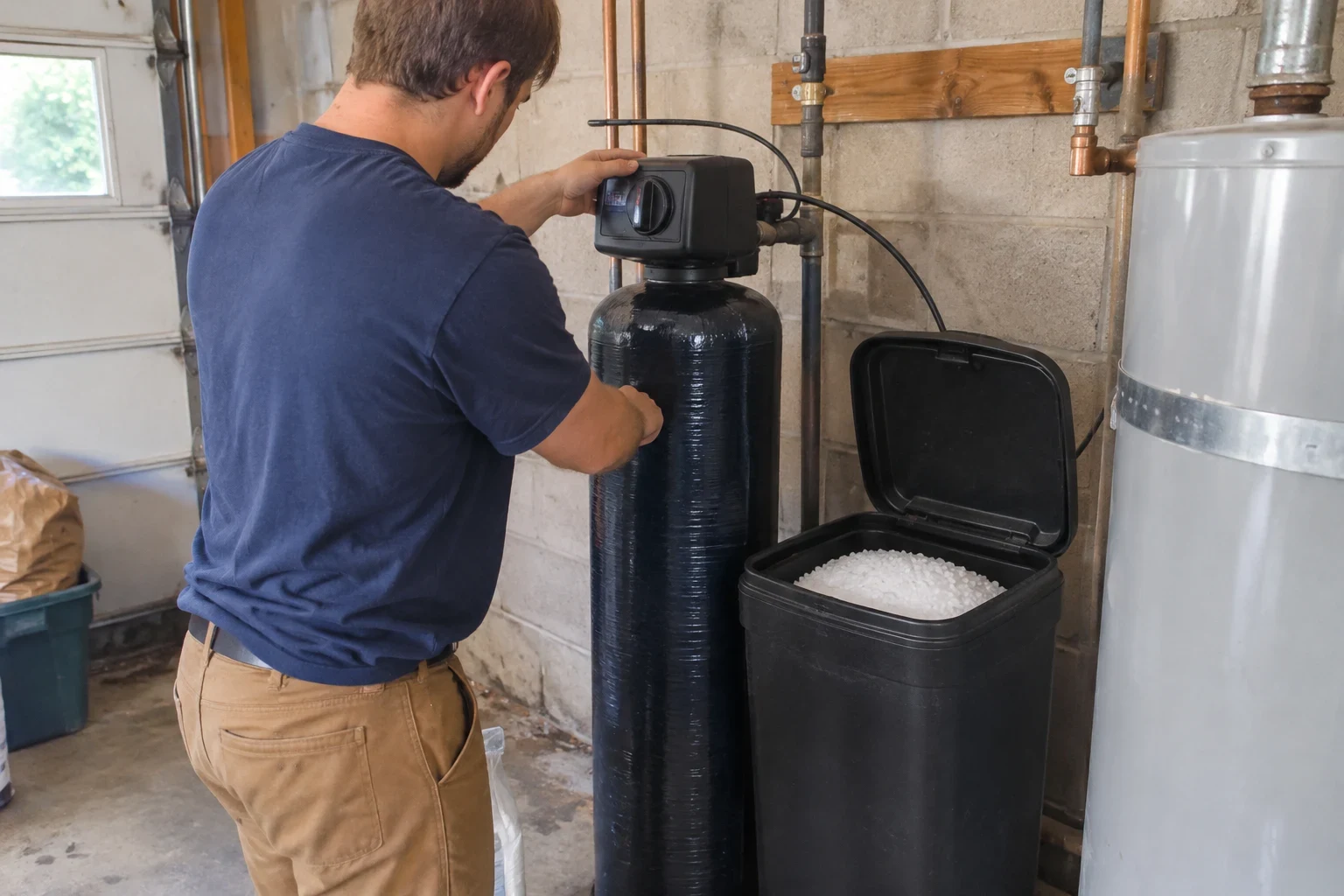
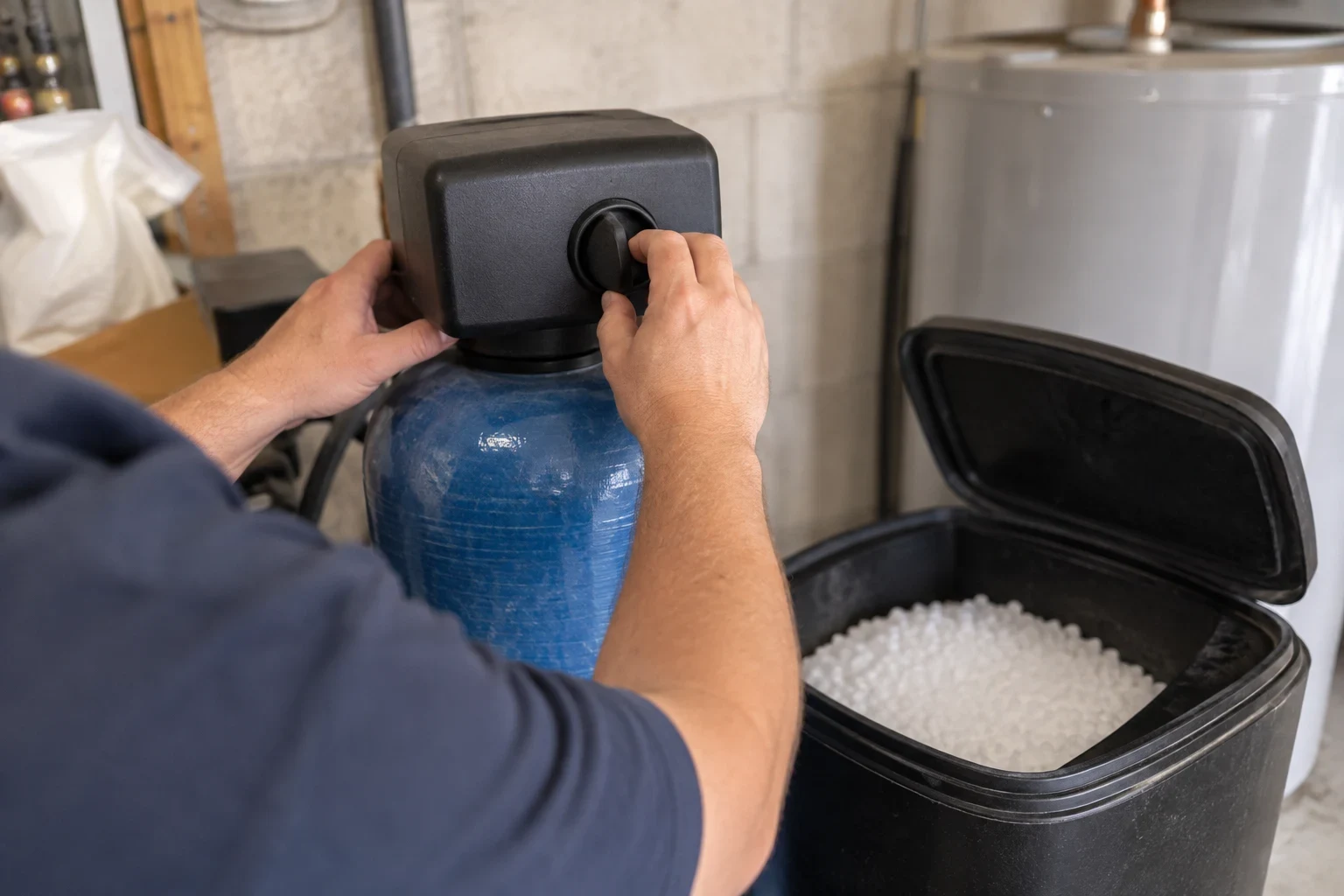
Hard water carries calcium and magnesium, and a softener removes them before the water reaches your taps and appliances. The tank is filled with resin beads that swap those minerals for sodium or potassium. When the beads can't hold any more, the valve rinses them with salty water drawn from the brine tank, and they're ready to soften again.
Hard water is common around this part of Wisconsin, and its damage is slow and easy to miss. Mineral scale tightens the inside of pipes, crusts over heating elements and wears down dishwashers and water heaters early. With softened water, that buildup stops and soap lathers properly again.
Other times the problem shows up overnight. Storm water reaches the basement, the softener sits in it, and afterward the valve refuses to cycle. We help you figure out quickly whether a repair will do or a new unit is the better buy, and we tell you honestly which one it is.
What your softener install includes
- Sized for your household
- We base the size on the number of people in your home, your daily water use and any hardness reading you already have. Too big a tank burns through salt. Too small a tank runs dry before it can recharge.
- A valve set to your usage
- We program the control valve to regenerate by the gallons you actually use instead of a set day of the week. Quiet weeks then cost you less salt and water.
- Bypass and main line connection
- Every install gets its own bypass valve. One turn of the handle sets the softener aside, and the rest of the house still has running water while it's serviced. We tie into your main line neatly, and where it makes sense we keep outdoor spigots on unsoftened water.
- A correctly run drain
- We route the regeneration discharge to a floor drain or standpipe and leave open air above the outlet. That gap means dirty water has no way to be pulled back into the softener.
- Removal of your old unit
- On a replacement, we disconnect the old softener, carry it out and leave the space clean.
- A quick lesson before we go
- We show you where the salt goes, how the bypass works and what the valve display is telling you. You'll also know what to look at if the power has been out.
Signs your home needs a softener
Chalky buildup at the taps
Rings of white residue on faucets, showerheads that spray off to the side and shower glass that stays cloudy all mean minerals are settling out.
Filmy dishes and rough towels
Minerals work against detergent. Glasses leave the dishwasher with a haze, and towels stay stiff no matter how much fabric softener you add.
Noise from the water heater
Crackling or knocking sounds while the heater runs often point to scale piled on the tank floor. The heater has to work through that layer, which wears it out faster.
A salt level that never drops
When the brine tank looks just as full from one month to the next, the softener likely isn't regenerating. Hard water may be getting through even though nothing looks wrong.
A unit that's been underwater
After a flooded basement or a burst pipe, the valve and electronics can stop working even if the tank looks fine. Phone us before you plug it back in.
What to expect from start to finish
- 1
Start with a free quote by phone
Describe your home, who lives there and what you notice at the faucets. We put together a free quote and can explain financing if that helps. The quote holds for 30 days.
- 2
Checking your space
We look at where the water main comes in, how much floor space is available and where the nearest drain sits. If a storm or leak damaged your current softener, we give you a plain answer on whether fixing it is worth it.
- 3
The day of the install
We turn off the water, place the tanks, connect the bypass and run the drain. Next we load resin and salt, program the valve and run a full regeneration while we watch for leaks.
- 4
Pay once it's running
Full payment is due when the install is complete and you've seen the system working. You also have three business days after signing to cancel if you change your mind.
What sets the price of your softener
No two installs look quite the same, so we price yours once we know the details. Your free quote spells out what the job includes, and we walk you through each line on the phone.
- Tank size and capacity
- A bigger household or harder water needs more resin and a larger tank. That costs more at the start, but the unit regenerates less often.
- The control valve you choose
- A metered valve that regenerates on demand costs more than a simple timer model. Over the years it usually uses less salt and water.
- Changes to your plumbing
- If your home already has a softener loop, the tie-in is simple. New pipe runs, a different location or a new drain connection add labor and material.
- Hauling out a damaged unit
- When an old or flood-soaked softener has to come out first, removal and cleanup of that area become part of the job.
Common questions about water softeners
Something not covered here? (262) 287-0725
Will softened water taste salty?
Very few people can tell. The sodium a softener adds is a small amount. If you want drinking water without it, a reverse osmosis system under the kitchen sink takes care of that, and we can put both in one quote.
Water got into our basement. Is the softener done for?
Not necessarily. The tank and resin usually hold up, but the control valve and its electronics tend to be what fails. Leave it unplugged, switch it to bypass if you can, and phone us so we can help you decide between a repair and a new unit.
What does a power outage do to my softener?
Most current valves keep their programming, though the clock can fall behind. After a long outage, check the time on the display and watch that the next regeneration happens when it should. We cover this during the walkthrough.
How often will I need to add salt?
That depends on how many people live in your home and how hard your water is. Many families refill every month or two. Keep the brine tank at least a third full and break up any hard layer that forms on top.
Do you offer financing on a new softener?
We do. It runs through U.S. Bank Avvance, on approved credit. Mention it when you phone, and we'll go over how the payments work along with your free quote.
My home runs on a private well. Will a softener cover it?
Often it won't on its own. Well water can carry iron and other problems that softening resin isn't built to handle. Have a look at our Well Water Treatment page, and tell us about the well when you phone so the quote matches what your water needs.
Ready for softer water at home
Tell us about your home and what you're seeing at the taps. We'll give you a clear, free quote and answer your financing questions on the same call.